

What would you say are some of the biggest challenges you face in portfolio resource managementResource ManagementWhen it comes to resource management, the focus is on the optimal planning, coordination and monitoring of resources. The term “resources” includes things like employees, budgets, materials and time. (PRM) at your organization? If you’re thinking of something in the realm of resource availability or scattered data, then you’re not alone!
Research in Action recently conducted a survey on the topic of PRM. In this blog post, we’ll introduce the questions to you and break down some of the results. Then, we’ll share our tips to get you back on the right track.
“Do you have enough resources to complete all your planned projects?”
Only about 10% of survey participants responded to this question with a confident “yes”, while roughly 13% said “no”. But that only adds up to 23% – what about the rest?
The remaining 77% of respondents were less certain, with over 50% saying “I don’t know” or “probably not”.

If you know you have enough resourcesResourceResources are all the people, places and things that you need to complete projects. The most important resource? Employees, of course!, that’s great! No additional steps are needed here. And if you know for sure that you don’t have enough resources, then you can immediately start on steps toward hiring new talent or outsourcing work.
But there’s really nothing worse than uncertainty. If you find yourself saying “maybe,” “probably,” or “I don’t know” a little too often, then you need to reevaluate your portfolio plans with a resource-focused lens.
Asking the Crucial Question: Who Does What, and When?
The key to success is remembering that your employees are your most valuable resource! It’s important to keep your finger on the pulse of resource utilization to keep your projectsProjectA project is a time-limited undertaking with defined objectives and resources that delivers unique results and often includes complex tasks. running smoothly. Each person has unique skills, experience, and – crucially – availability. Sometimes a single person can cause a bottleneck that stalls an entire project.
To avoid this, it’s best to take a step back. Ask yourself: Who does what, and when? Once you have the answers to this question, you can ensure that people are working on the right things at the right time, and that the timelines in place are realistic.
But as simple as this question seems, it’s much more difficult to answer than you might think. What’s the scale you’re working with? What are people working on today, or in the next week, or the next quarter, or even next year?
Our Resource Management Continuum helps you break down the different timings by posing a few more questions.
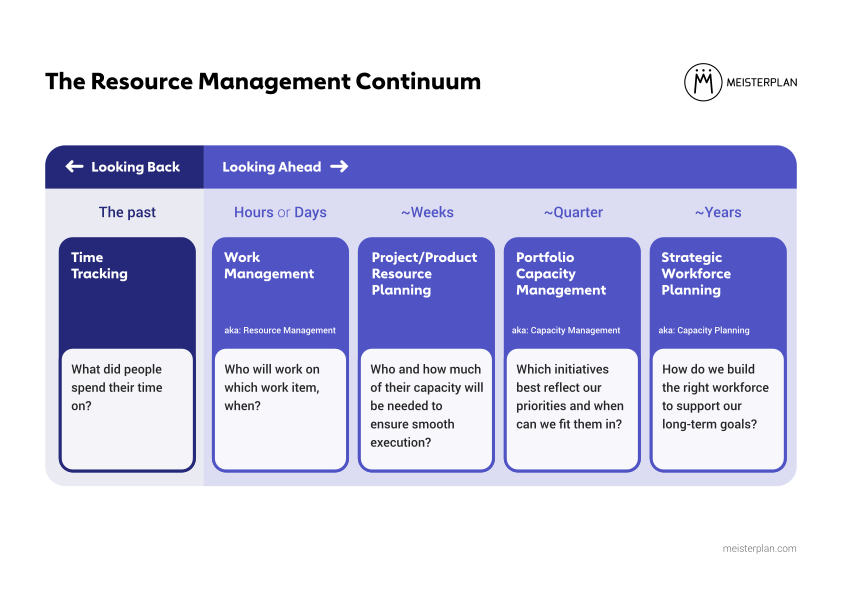
For example, if you’re looking at the next quarter, you’ll want to know which initiatives best reflect your strategic goals. By allocating your available resources to the highest priority projects first, you guarantee that you’ll have enough resources to accomplish them on time. Any remaining projects that you don’t have the capacity for must be a lower priority. Take the time to re-evaluate these – are they truly necessary? Can they be delayed until next quarter, or even later?

Read more about the Resource Continuum in our blog post to fully understand the different questions you should ask yourself. Or, watch an on-demand presentation on the topic by Meisterplan’s Managing Director, Dr. Christoph Hirnle.
“How many project management tools do you currently use?”
When asked this question, only about 10% of respondents said that their company uses one single project managementProject ManagementProject management is the planning, steering, and monitoring of projects to achieve specific objectives within a given timeframe and budget. tool. That could be, for example, Jira or MS Project.
However, a vast majority of organizations use multiple tools to organize their work, and the number of tools they use naturally increases as the organization grows.

A huge challenge for many organizations is transparent communication across different tools and channels. When every team uses their own tools, information can easily get lost, mixed up, or hidden.
For example, an employeeEmployeeSynonym for → ResourceResources are all the people, places and things that you need to complete projects. The most important resource? Employees, of course! might accidentally leave something out while manually inputting the same data in multiple places. Or, they might not have the time to do all that duplicate work, causing the data in some tools to become outdated. The longer this goes on, the more this can snowball into an even larger issue of inconsistent and conflicting data.
Keep Your Data Organized with a Centralized Planning Hub
Simply put, you need to establish a single source of truth. A designated tool like Meisterplan acts as a decision-making hub that anyone in the organization can turn to for accurate and up-to-date information.
You can easily sync data from other tools using connectors and APIs to eliminate double data maintenance. That means you can trust that projectProjectA project is a time-limited undertaking with defined objectives and resources that delivers unique results and often includes complex tasks. data stays up to date in your central tool without constantly double checking in other places.
On top of being a timesaver, having a centralized planning hub means that everyone can access reliable data without needing to learn how to use every tool. By customizing access rights, you can even ensure that people in different roles can only see the data that’s relevant to their own work.
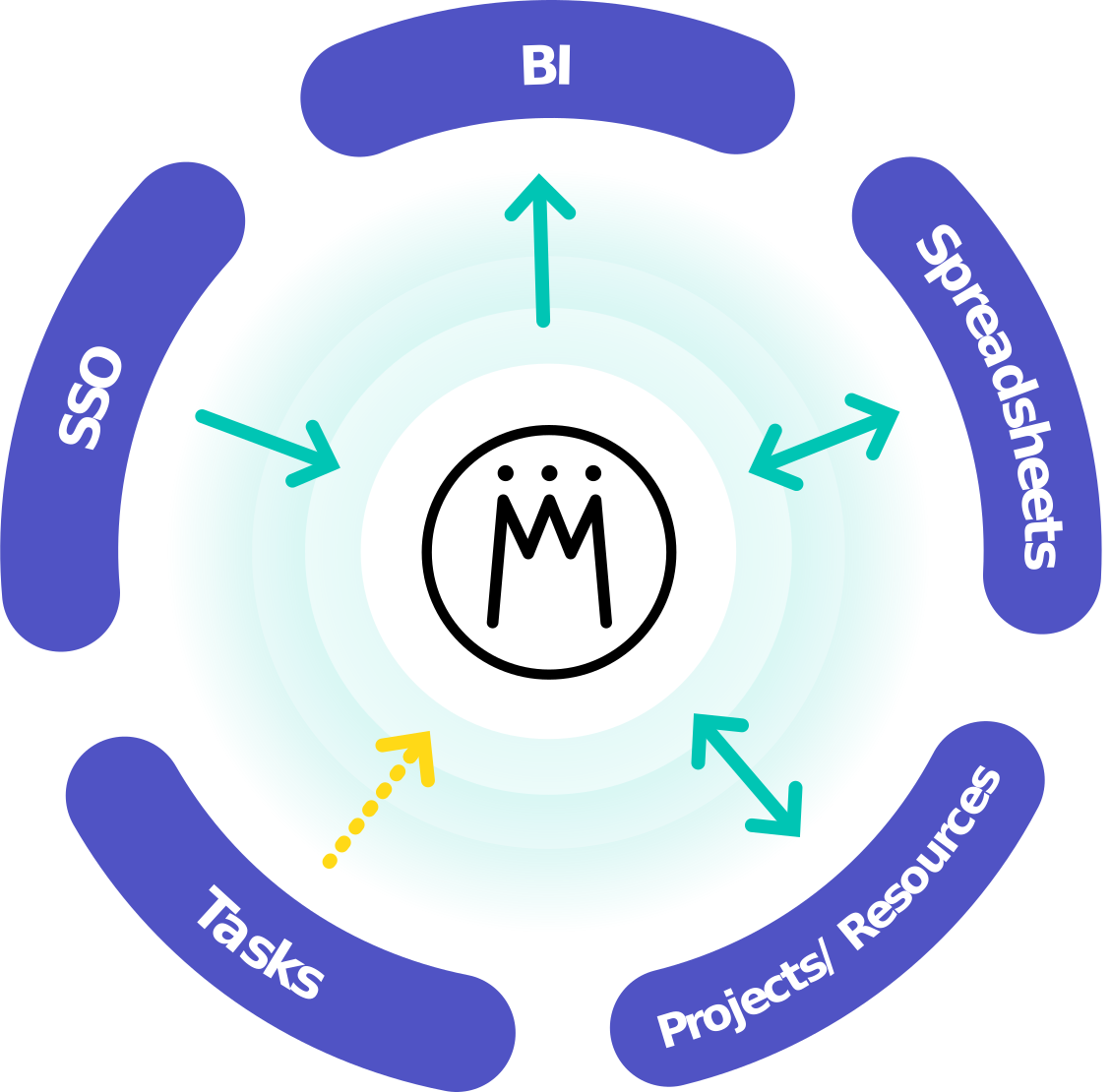
And this goes well beyond just project management tools! Meisterplan, for example, also integrates with tools built for spreadsheets, BI reporting, and user management. This gives organizations a holistic view of the entire portfolio.
In Summary
Regardless of your organization’s size or industry, some topics are evergreen. Here are the two main takeaways we hope you walk away with:
- Actively keep track of your resourcesResourceResources are all the people, places and things that you need to complete projects. The most important resource? Employees, of course! when planning projectsProjectA project is a time-limited undertaking with defined objectives and resources that delivers unique results and often includes complex tasks.. Your resource availability determines how much you can really accomplish!
- Make sure your data stays centralized, even as your system landscape grows more complex. This means setting up a way for everyone to easily input, edit, or view all relevant information.
If you’re looking for a way to successfully manage these challenges, consider reaching out to our team of experts at Meisterplan. We’re happy to chat and help you identify the right solution for your team!
Read Next

Why Portfolio Unity Doesn’t Require Tool Uniformity
In the fifth post of this series on portfolio planning with Jira data, we look at how organizations can make better portfolio decisions without requiring every team to use the same tool.

Why Annual Planning Alone Isn’t Agile, and Ad-Hoc Decisions Aren’t Either
In the fourth post of this five-part series on portfolio planning with Jira data, we look at why organizations need a regular portfolio decision cadence that balances strategic agility with team focus.