

When Everything Feels Like a Priority
Capacity gets stretched when important work keeps getting added without other work moving aside. For example, a high-value initiative needs help from the same team already supporting three other priorities. A deadline stays fixed even though the people needed to meet it are split across competing work. A new request gets approved because it matters, but no other work gets deprioritized.
Strategic plans often start with alignment around organizational goals. Leadership teams identify key initiatives, align around priorities, and define the outcomes they want to achieve. But as new priorities emerge and additional work gets added across teams, maintaining that focus becomes much more difficult.
Eventually, organizations reach a point where everything feels important. And when everything is treated like a priority, resources get spread too thin to support meaningful progress where it matters most. That is when deadlines become harder to protect, even for the work everyone agrees is important.

Resource Allocation Shows the Real Priorities
Resource allocation shows the difference between what organizations say they prioritize and where teams are actually spending their time and energy.
As Jeff Austin of DuPont Pioneer said in PMI and Economist Intelligence Unit research on strategy execution:
“Where you have resources allocated really says what you have prioritized.”
That reality becomes especially difficult to navigate in organizations managing multiple strategic initiatives across departments, teams, and competing business needs. New work continues entering the portfolio while existing commitments remain active. Teams are asked to support more initiatives simultaneously. Strategic priorities shift faster than organizations can realistically absorb them.
Teams may be fully committed, but leaders need a clear way to see whether resource allocation is still aligned to the organization’s most important priorities.
Aligning Resources to What Matters Most
When leadership teams can clearly see where capacity is being allocated across the organization, prioritization conversations become more productive. Organizations gain a better understanding of which initiatives are driving strategic value, where teams may be overloaded, and what trade-offs are required to support new work successfully.
Instead of relying on assumptions or scattered reporting, leaders can make clearer decisions about where to focus time, people, and investment.
Meisterplan works as a portfolio layer across existing tools and delivery methods. It helps organizations connect strategic goals with the reality of available capacity, competing demands, and resource allocation across the portfolio.
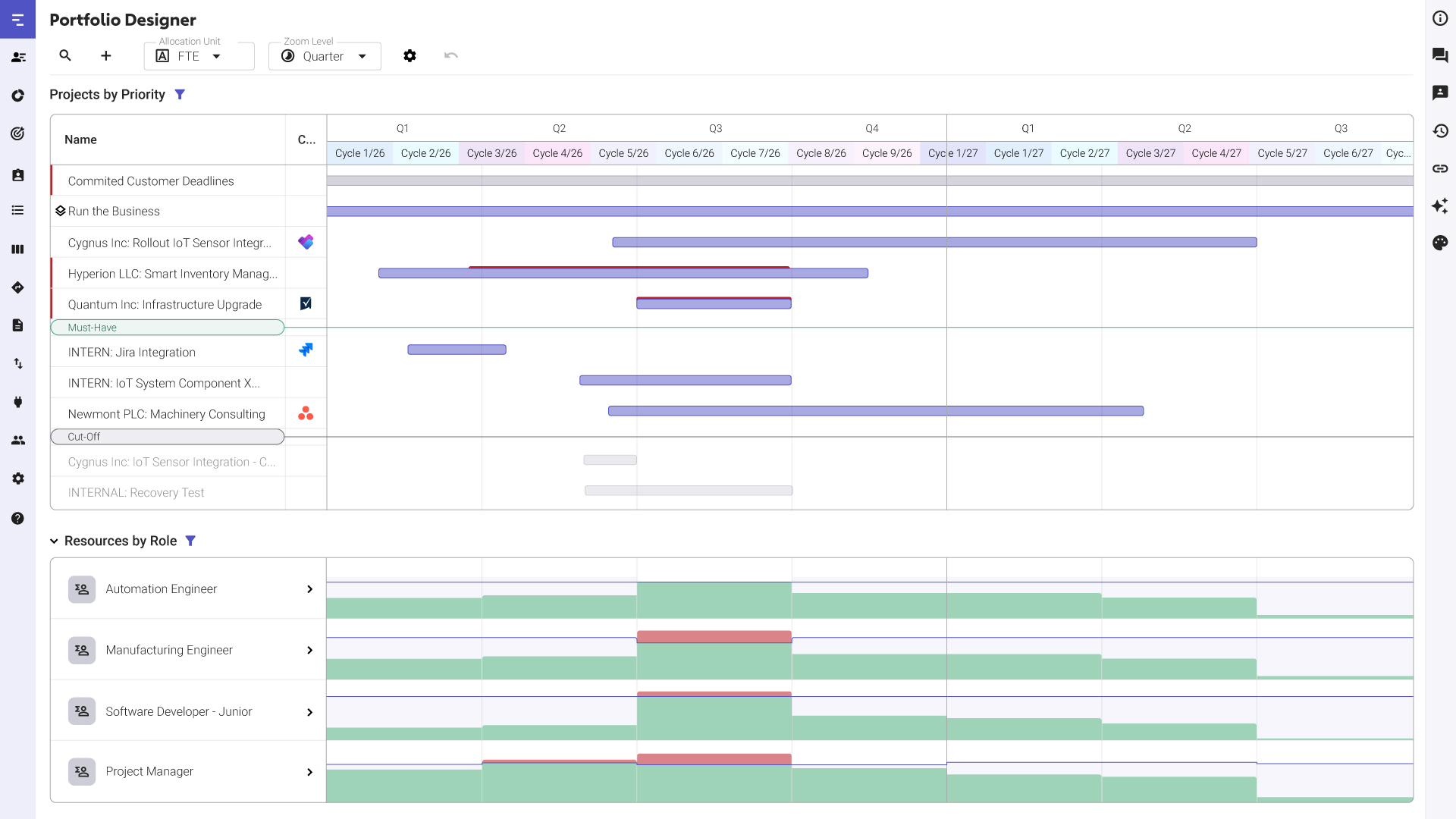
For organizations already using Meisterplan, this is where portfolio visibility becomes more than a reporting view. It becomes a way to check whether new commitments fit the capacity and priorities already in place before teams are asked to take on more.
Priorities will always evolve. New initiatives will always emerge. But organizations are far more effective when they can intentionally align resources around the work that matters most instead of reacting to competing demands as they arise.
Jay Nutter, IT PMO and New Services Manager at CaroMont Health, described the importance of that alignment this way:
“There are a lot of things that go into a project plan besides the timing and resources. We need a lot of context and it shouldn’t be a surprise when a project needs attention. Our projects need to tie back to our mission and what we want to achieve. With Meisterplan, we can make informed decisions and move the organization forward.”
Organizations create more strategic impact when teams understand not only what work is being prioritized, but why it matters and how it supports broader organizational goals.
Focus Turns Strategy Into Progress
It is rare to make meaningful progress by trying to do everything at once. Instead, progress comes from giving the most important initiatives enough focus and capacity to move forward.
As priorities continue shifting across industries, the organizations that execute strategy most effectively are often the ones that maintain the clearest focus. They understand where resources are being allocated, recognize trade-offs earlier, and make intentional decisions about what the organization can realistically support.
When leadership teams can connect strategic priorities with resource allocation, they can protect high-value work and give teams a better chance of delivering what matters on time.
Read Next