

In this blog post, I’m setting out to answer three main questions so you can go back to work with practical ideas to drive positive change in your organization.
- Why should software adoption matter to you?
- What does it take for employeesEmployeesSynonym for → ResourceResources are all the people, places and things that you need to complete projects. The most important resource? Employees, of course! to accept a tool?
- How can you relatively easily contribute to higher adoption?
Why Software Adoption Should Matter to You
To put it bluntly: Because otherwise you end up with poor data quality. And that leads directly to poorer decisions, which in turn negatively affect morale and business outcomes. But where does poor data quality actually come from?
People who don’t like using the tools provided to them usually don’t use them – or they keep their usage to the absolute minimum. For you, that means data is maintained inconsistently. Sometimes it’s complete, and sometimes it isn’t. Sometimes the data exists, but it’s stored in a different tool that the team prefers.
In our experience, reminder emails and similar measures rarely help. That’s frustrating for everyone involved, but there’s a simple reason behind it.
What It Takes for Employees to Accept a Tool
Research on this topic established a model many years ago that still helps us understand when people use a tool and when they don’t: The Technology Acceptance Model (TAM). In its simplest form, TAM describes two pillars on which the willingness to use any tool is built:
- Perceived Ease of Use: How intuitive and effortless is the system to use?
- Perceived Usefulness: What concrete, personal benefit does the tool bring to my own work?
In short: people use what is easy for them – and what benefits them personally. If a tool is complex to use and delivers no tangible value to the user, adoption drops to zero.
So, what can you do to influence these two parameters in your favor?
Use These 3 Levers to Easily Create More Adoption
In our experience, there are three powerful levers that almost any organization can activate with relatively little effort:
- Make use of existing tools by integrating the ones your teams already love.
- Focus on simplicity by streamlining processes, collecting less data, and removing barriers through AI-supported software design.
- Make usage worthwhile by clearly communicating the value and making it tangible in everyday work.
Why these three? And what does this look like in practice? Let’s explore that next.
1. Make Use of Existing Tools with Integrations
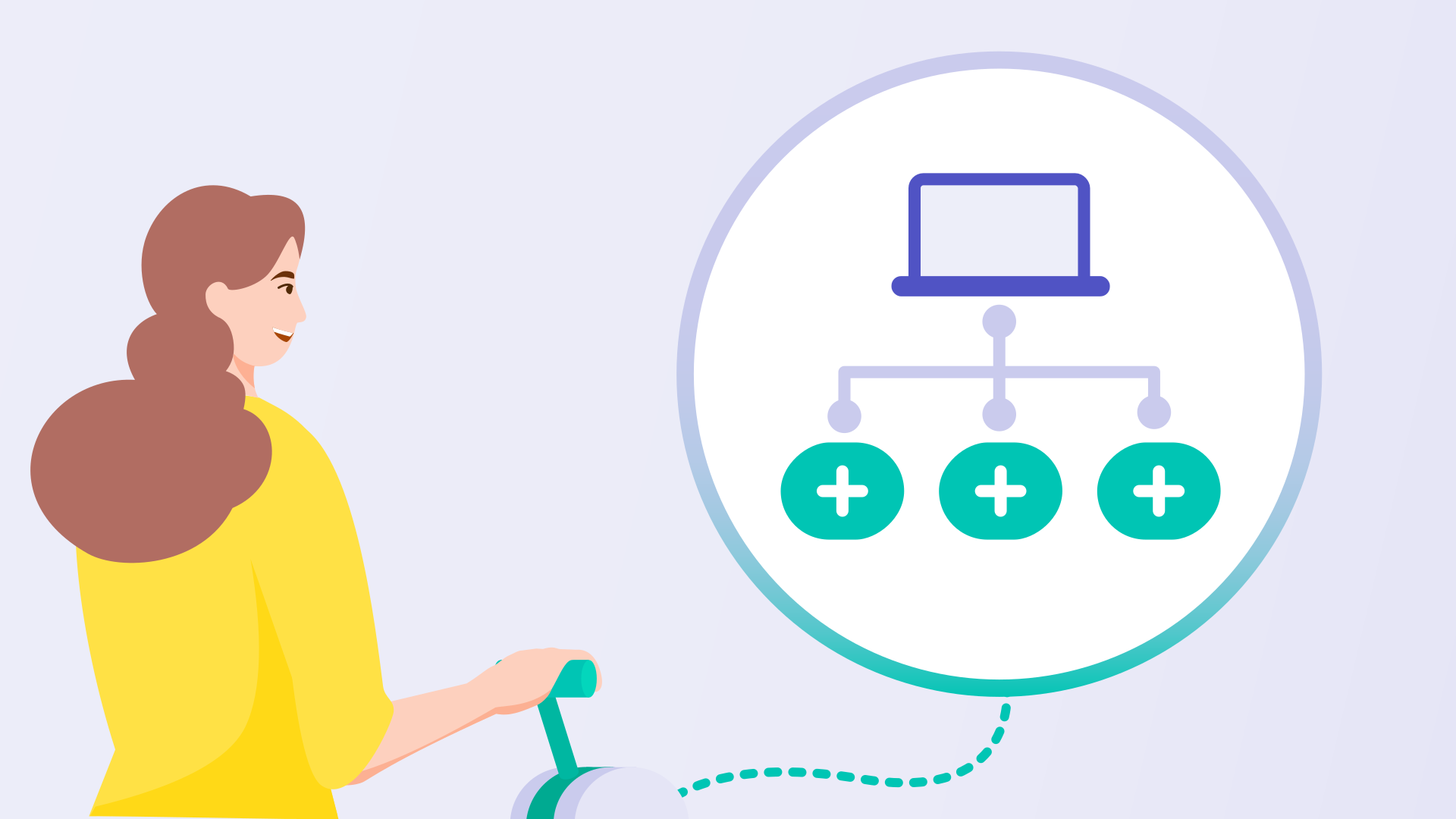
The first and most pragmatic path to high adoption is this: Meet people where they already do their most productive work. Many departments already use software solutions that are perfectly tailored to their needs. A classic example is software developers who manage their daily tasksTasksSynonym for → ProjectA project is a time-limited undertaking with defined objectives and resources that delivers unique results and often includes complex tasks. in Jira.
This group already has high adoption of Jira and maintains their data there diligently. You can take advantage of that.
Connect Rather Than Replace
Instead of replacing a tool like Jira with sprint modules in a suite or forcing colleagues to maintain data twice, you can simply pull the data into your PPM tool via integrations. This automatically improves data quality, and you avoid adoption issues altogether. Teams won’t object if they don’t have to put in extra effort.
The key is not to blindly synchronize every available data point. If every single Jira ticket ends up in your strategic portfolio, you don’t gain insight at all. You just end up with an unmanageable mess of data.

2. Remove Barriers Through Simplicity
For work that can’t be handled through integrationsIntegrationAn integration is a virtual interface that connects different software programs and enables automated data exchange between them. This allows for more efficient processes, better planning, and consistent information., people work directly in the system. Therefore, the system needs to be so simple that it requires no explanation.
The most common mistake: Organizations take their existing processes – complexity and all – and pour them one-to-one into the new software. The result is a digital bureaucracy machine that no one wants to touch.
Simplicity Through Lean Processes (Lean PPM)
Anyone who has seen a team breathe a sigh of relief when they no longer have to document every minor detail immediately understands the value. Lean PPM reduces complexity to what really matters:
- You collect only the information that is truly needed for upcoming decisions.
- You define clear roles and responsibilities without conflict-prone overlaps.
- You establish a small number of focused committees and meetings instead of endless rounds of coordination.
Simplicity Through the Right Software Design (The 3-Role Model)
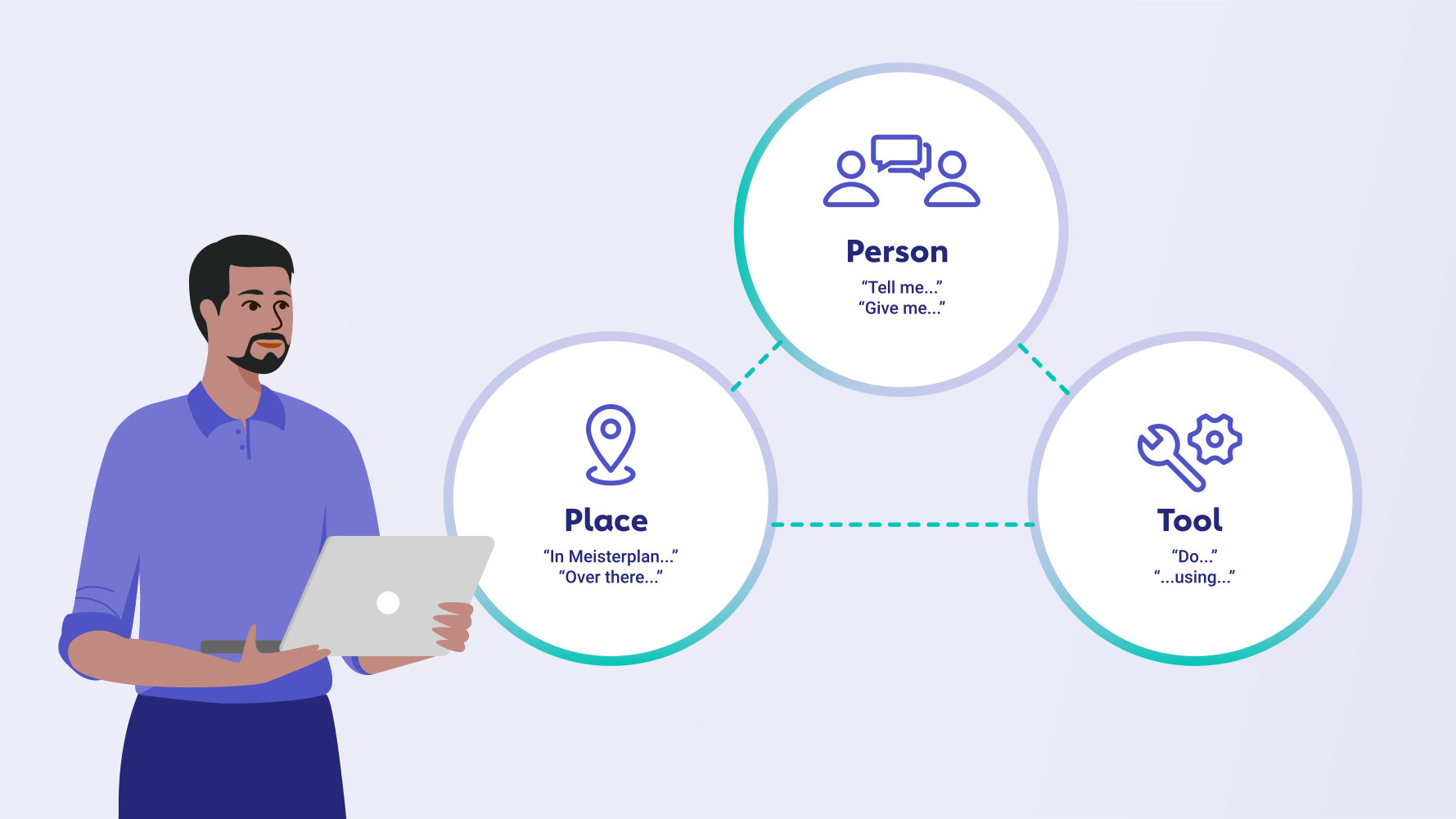
In addition to processes, the software design itself is also critical. Our Senior Product Owner, Dr. Susanne Sahm, found that people perceive enterprise software through one of three lenses, and respond to entirely different design elements depending on that perception.
- The Place: Explorative users look for spatial structure. They respond to navigation elements like menus, tabs, or dashboards that help them orient themselves
- The Tool: Task-oriented users look for efficiency. They want clear UI elements such as buttons, toolbars, and shortcuts – the feeling of control and speed.
- The Person: Social-cognitive users look for collaboration. They respond to anthropomorphic features like chatbots, personalized greetings, or feedback that feels like a real conversation.
Classic enterprise software is built almost exclusively for the first two groups. The third group – around 20% of users – is lost from the start.
Simplicity Through AI as a Counterpart
This is exactly where AI can make a meaningful difference. In Meisterplan, AI Summaries generate concise status reports at the push of a button, instead of forcing someone to dig through old comments and changes. And with our new MCP, users can ask their preferred AI agent about the portfolio status using natural language. The system becomes a conversation partner – for all three user types.

3. Make Usage Worthwhile
Even a lean, well-integrated system can fail if individual users don’t understand what’s in it for them personally. The infamous WIIFM (“what’s in it for me?“) cannot be dismissed with appeals to corporate goals. Successful project portfolio managementProject Portfolio ManagementProject portfolio management (PPM) is a process that seeks to select, prioritize, monitor and analyze a company’s projects. is always an honest give-and-take: those who provide data must get something in return.
A Real-World Example of Effective Value Communication
Imagine a resource manager whose task is to keep his team’s availability up to date. This is the “giving” part. If this is framed as a chore for senior management, he’ll put it off indefinitely. We all know the feeling of tedious administration with no visible benefit.
But when you show him the direct impact of his input, his attitude changes. He maintains capacity data and immediately sees the system raise alerts as overload approaches. When an urgent ad-hoc project is about to assigned to the team the next day, he can argue based on real data: “We simply don’t have any available capacity for this.”
That’s the “taking” part. He protects his team from overload and gains an objective tool to say no. The initial sense of obligation turns into a sense of control. Anyone who has experienced this never questions the value of data maintenance again.
Conclusion: Adoption Comes from a Consistently User-Centered Environment
Software adoption is a continuous indicator of how well a work environment is aligned with people’s real needs.
Those who stop viewing enterprise software purely as a data collection tool open the door to an entirely new way of working:
- Integrate existing tools to avoid disrupting proven workflows.
- Choose software that meets everyone where they are – from structured analysts to collaboration-focused employeesEmployeesSynonym for → ResourceResources are all the people, places and things that you need to complete projects. The most important resource? Employees, of course!.
- Communicate value so clearly that everyone immediately understands what they have to gain from contributing.
The reward for this approach is more productive teams, more motivated employees, and significantly better data.
Read Next


Is a Single Source of Truth Unattainable?
Why the answer to the IT dilemma can be found with intelligent integration – not all-in-one suites and SaaS parties.

How to Harness the Power of Your Team from Any Seat!
Just because a group of people come together to work, doesn't mean that they're a team. Read this insightful blog post from expert Sinikka Waugh to learn how to best establish a successful team dynamic.