
If you’re leading a PMOPMOSynonym for → Project Management OfficeA Project Management Office (PMO) is a permanent organizational unit responsible for the centralized and coordinated management of all projects. in a software organization, you already know that your team’s most valuable asset isn’t software, infrastructure, or even your roadmapRoadmapA roadmap is a strategic overview of one or more projects, their progress, milestones, and objectives.—it’s your people. But how often does your resource planning process reflect that reality?
Below is a 2018 study from the Harvard Business Review that examined the top barriers to successful strategy implementation. As the graph shows, people recognize that there are just too many initiativesInitiativesSynonym for → ProjectA project is a time-limited undertaking with defined objectives and resources that delivers unique results and often includes complex tasks. and not enough resourcesResourceResources are all the people, places and things that you need to complete projects. The most important resource? Employees, of course!.
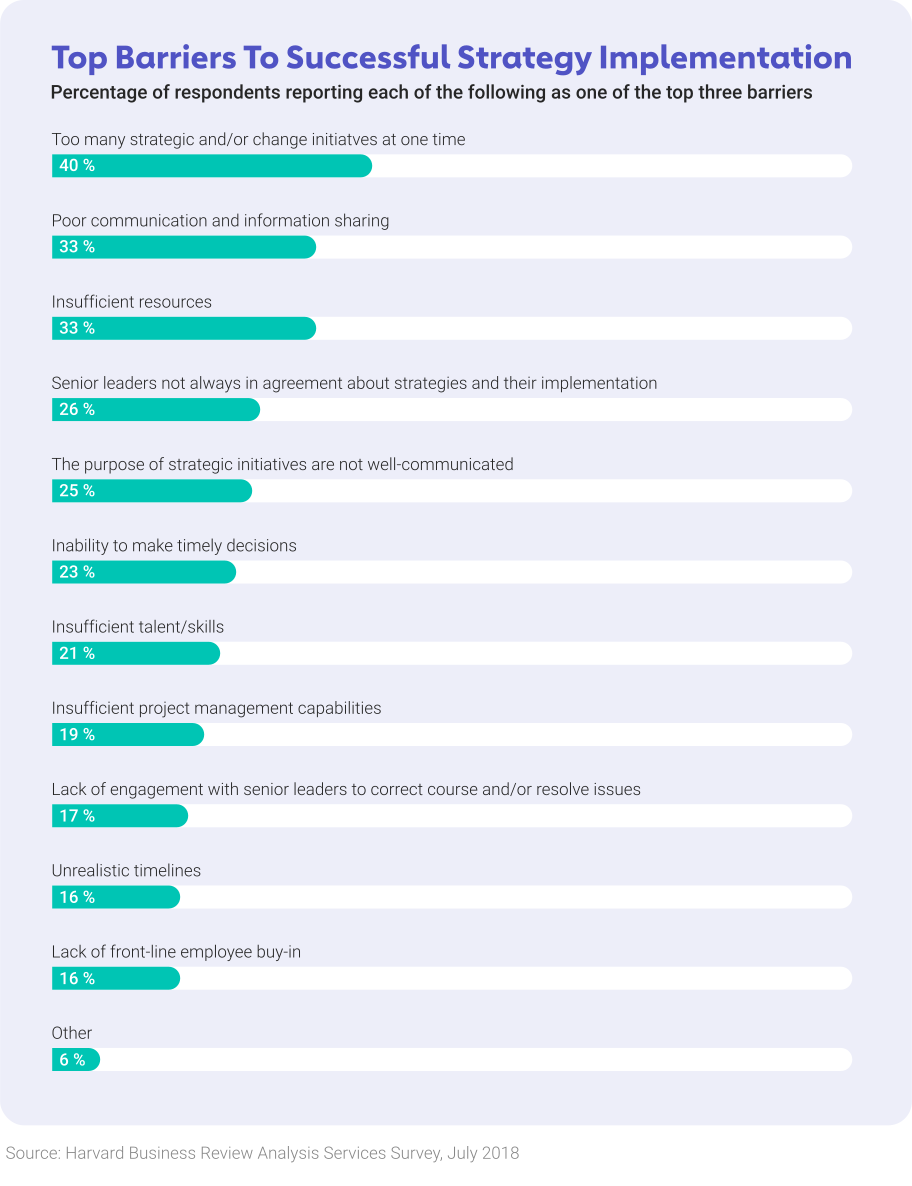
They understand the importance of resource planning, but in many cases, it still feels like a tangled mess of spreadsheets, missed assumptions, and putting out fires. We’re overloaded with projects, struggling with bottlenecks, and constantly justifying to leadership why things are behind schedule. Yet the solution isn’t always more tools or more people—it’s better questions.
Let’s explore how asking the right questions can reshape how your PMO plans, prioritizes, and succeeds.
Why Human Resources Deserve Center Stage
For decades, projectProjectA project is a time-limited undertaking with defined objectives and resources that delivers unique results and often includes complex tasks. plans have been built around deliverables, where speed, innovation, and adaptability rule. Yet, it’s the people behind those deliverables that determine success. Unlike equipment or physical inventory, people can’t be “stored” or “queued” for later use. If they’re unavailable or misallocated, the time is simply lost. And that lost time means lost opportunity.
When your people have limited availability, making the most of their time becomes critical—not just for productivity, but for strategic impact. Every hour spent should move the organization closer to its goals.
That’s why your first big question should always be: What are our people working on right now, and does that work reflect our strategic priorities? If effort and strategy are out of sync, even the most efficient execution can fall short of delivering real value.
The Cost of Not Knowing
When you don’t have visibility into resourceResourceResources are all the people, places and things that you need to complete projects. The most important resource? Employees, of course! allocationAllocationAllocating describes the strategic process of identifying the correct resources for projects or individual tasks and assigning them accordingly. and alignment on strategic priorities, several problems arise:
- ProjectsProjectA project is a time-limited undertaking with defined objectives and resources that delivers unique results and often includes complex tasks. start without the right people available.
- Critical expertise is overbooked, delaying work across portfolios.
- Teams become burnt out or disengaged.
- Strategic initiatives are deprioritized in favor of short-term “fire drills.”
- Projects simply don’t deliver.
And here’s the kicker—these problems usually show up when it’s already too late to fix them.
So how do you prevent that? You start asking better questions.
Rate Your Resource Planning Skills
Let’s walk through a set of high-impact questions every PMOPMOSynonym for → Project Management OfficeA Project Management Office (PMO) is a permanent organizational unit responsible for the centralized and coordinated management of all projects. should be asking:
- Are we using our expert teams where they add the most value? Are your most skilled developers stuck in support roles? Are senior architects being pulled into low-priority tasksTasksSynonym for → ProjectA project is a time-limited undertaking with defined objectives and resources that delivers unique results and often includes complex tasks.? Mapping skill to strategy helps ensure you’re getting maximum value from your talent.
- Do we have visibility into cross-departmental constraints?
Often work is highly interdependent—product, engineering, customer success, and operations must collaborate. But do you have clear insight into how one team’s bottlenecks affect another? - Do you keep track of patterns of resourceResourceResources are all the people, places and things that you need to complete projects. The most important resource? Employees, of course! conflicts?
If the same people or teams are constantly overbooked, your planning process has a blind spot. The solution might be to reallocate work, hire, or even simplify your product offerings. - Are you confident your highest-priority initiatives are adequately staffed?
Are our priorities reflected in our resource plan? It’s easy to say that something is a top priority—but do the allocationsAllocationAllocating describes the strategic process of identifying the correct resources for projects or individual tasks and assigning them accordingly. back that up? Are the right roles committed to the most critical initiatives? - Do we have a plan for upcoming hiring or upskilling?
Thinking ahead matters. If you know a new initiative will require a skillset you don’t yet have, when are you building that capacity? A defined, repeatable process for hiring based on skill, upskilling, and assigning people to projects helps ensure roles are filled based on priority, availability, and skill fit.
To make this self-assessment easier, we’ve created a guide to answer these questions and rate your resource planning skills. The guide also includes ideas on next steps to help you improve your resource planning.
Just enter your email below to access the Resource Planning Self-Assessment Guide.

Making Resource Management Strategic, Not Just Tactical
The best PMOsPMOsSynonym for → Project Management OfficeA Project Management Office (PMO) is a permanent organizational unit responsible for the centralized and coordinated management of all projects. aren’t just coordinating delivery—they’re enabling it strategically. Resource managementResource ManagementWhen it comes to resource management, the focus is on the optimal planning, coordination and monitoring of resources. The term “resources” includes things like employees, budgets, materials and time. isn’t about filling slots on a calendar; it’s about enabling teams to actually do the most important work.
This means shifting from:
- Static planning to continuous forecasting
- One-size-fits-all allocationAllocationAllocating describes the strategic process of identifying the correct resources for projects or individual tasks and assigning them accordingly. to role- and skill-based planning
Top-down assignment to collaborative availability modeling
Tools Help, But There Is More that Matters
Yes, using a smart resource planning platform like Meisterplan helps. Even the best tools if not combined with the right mindset, culture, transparency and processes, nothing will get done. If resourceResourceResources are all the people, places and things that you need to complete projects. The most important resource? Employees, of course! discussions only happen when something goes wrong, you’re stuck in a reactive cycle.
Make resource planning a strategic conversation at the leadership table. Discuss where talent is being stretched, how work is flowing across teams, and where you need to grow or pivot. When you normalize that conversation, your PMOPMOSynonym for → Project Management OfficeA Project Management Office (PMO) is a permanent organizational unit responsible for the centralized and coordinated management of all projects. becomes a trusted business partner.
As Christoph Hirnle, our Managing Director here at Meisterplan, has discussed: Resource management isn’t rocket science—but it is people science. And people science begins with better questions. By turning your resource planning process into a dialogue driven by inquiry and insight, you build a more adaptive, impactful PMO that delivers what matters most.

What Philipp loves about Meisterplan
Meisterplan provides us with what we need for excellent strategic portfolio and resource management: All essential information on one screen to make sound decisions, and for teams to see what they need to work on and when. It is powerful yet so easy to work with, whether we apply waterfall, agile, or hybrid.

What Amandine loves about Meisterplan
On top of providing extremely well-documented user guides, Meisterplan’s Customer Success team offered personalized support that made a real difference for us. They work closely with their customers to understand their specific business needs and can quickly identify the right configuration solution to meet them.

What Robert loves about Meisterplan
Before working with Meisterplan, we consistently underestimated the people resources needed to achieve project outcomes. This made it difficult to set realistic timelines and complicated our planning efforts. Thanks to Meisterplan's expertise and support, we're now better positioned to plan with confidence and deliver results.

What Michael loves about Meisterplan
The key quantifiable difference since we started using Meisterplan is that planning horizon has moved immediately from short term to long term, from 3 months to 18 months. And that creates more efficient communication, and better and more logical decision making.

What Steve loves about Meisterplan
The flow of our projects is highly dynamic, and Meisterplans' Scenario Modeling has greatly enhanced our ability to manage the swings whether upward or downward.

What Matthias loves about Meisterplan
Before implementing Meisterplan, our resource management was a game of Excel bingo: timeconsuming, cumbersome, and error prone.

What Tobias loves about Meisterplan
With Meisterplan, we are able to implement our internal strategic projects with less than 10% deviation from the planned schedule.

Stay Up to Date with Our Newsletter
Not ready to buy our software just yet? No worries – you don’t have to be a customer to benefit from our monthly newsletter. We have tips and tricks for anyone involved in managing many people across many projects.