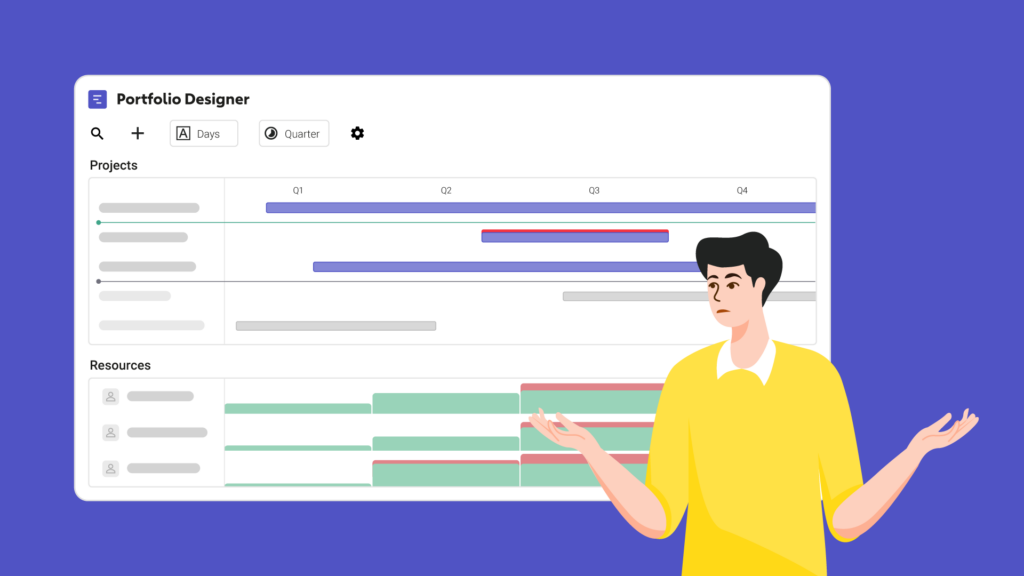

The Hidden Cost of Slow Strategic Decisions
A slow portfolio decision rarely feels like a major business risk in the moment. Often, it feels like the responsible choice: take more time, gather more input, and make sure leaders understand the impact before committing.
But when decisions take weeks, teams wait, priorities blur, and strategic momentum slows.
Leadership teams want to move quickly. While teams need clarity on what matters most. In many organizations, strategic conversations become slower and more reactive over time. Meetings are spent collecting updates, debating priorities, and trying to understand the impact of new initiatives before decisions can be made.
Teams are usually putting in the effort. What slows decisions down is the difficulty of evaluating priorities and trade-offs across a constantly changing portfolio.
When Trade-Offs Aren’t Clear
When leaders cannot clearly see how priorities, timing, resource constraints, and existing commitments connect across the portfolio, even straightforward decisions become difficult.
New initiatives compete with work already in motion. Teams are spread across too many priorities at once. Strategic conversations start focusing more on gathering information than making decisions.
As Michael E. Porter wrote in Harvard Business Review:
“Strategy is about making choices, trade-offs; it’s about deliberately choosing to be different.”
Leaders can make trade-offs more confidently when they can see the effects of each option.

Without a clear view of what would need to move, pause, or change, leadership teams can spend more time circling a decision than making one.
What Changes When Leaders Can See the Full Picture
Portfolio-level visibility gives leadership teams a clearer basis for making decisions.
When leadership teams can compare scenarios, understand resource implications, and evaluate trade-offs before committing work, decision-making becomes faster and more productive. Discussions shift from reacting to problems to aligning on the best path forward.
Organizations can answer critical portfolio questions faster and with a clearer understanding of the impact across teams and priorities:
- Can we fit this in somewhere?
- Why are projects delayed again?
- What happens if we prioritize this initiative?
With those answers available sooner, leadership teams can spend less time gathering context and more time deciding which path to take.
Meisterplan gives leaders a practical place to compare options before they commit teams. By bringing priorities, resource visibility, and scenario planning together, Meisterplan helps leadership teams evaluate trade-offs earlier, align more quickly, and understand the downstream impact of decisions before work begins.
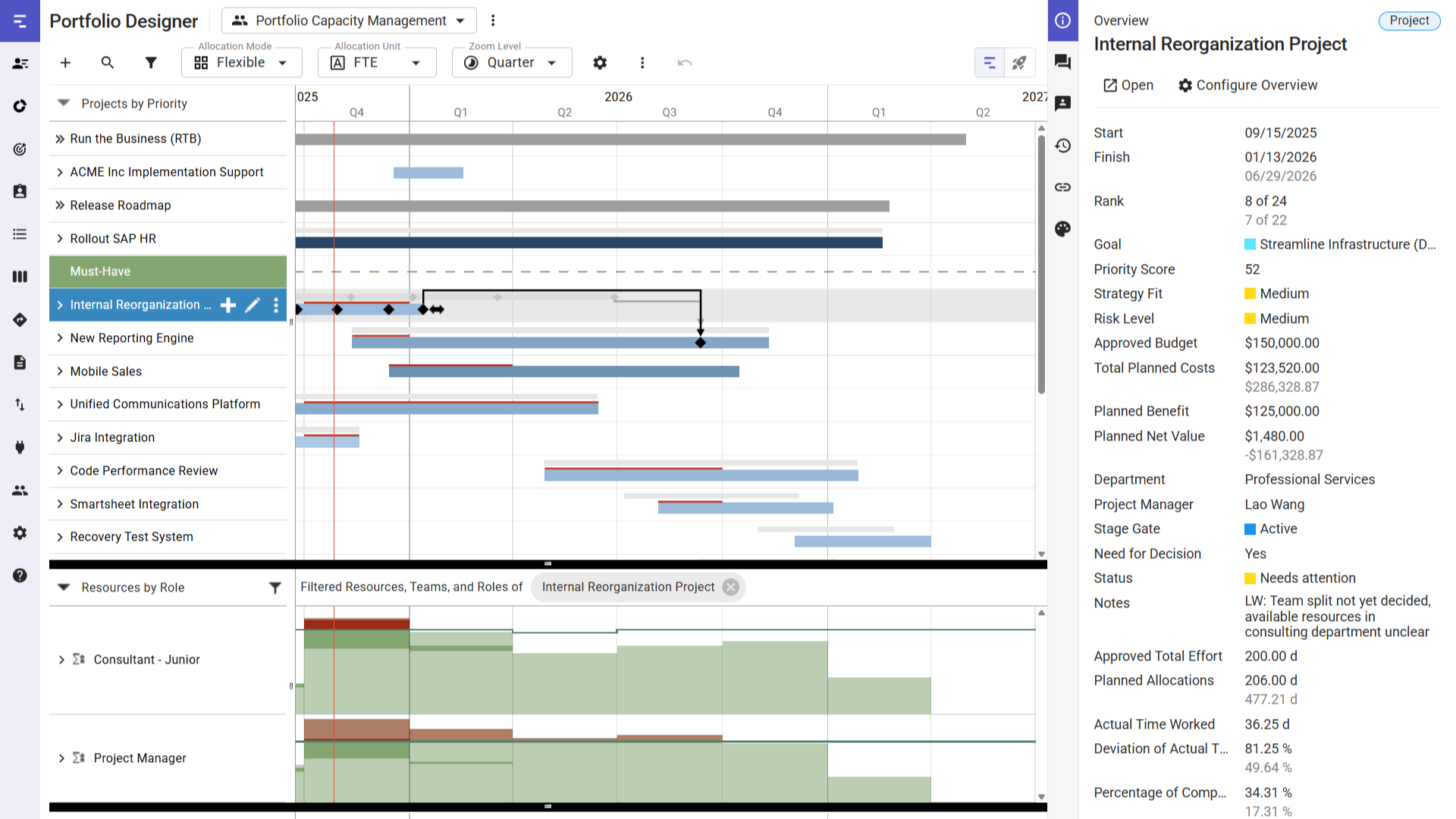
For organizations already using Meisterplan, the bigger opportunity is to use it earlier: before commitments are made, before teams are overloaded, and before the decision turns into another manual analysis cycle.
This is also where the Lean PPM™ approach helps: it gives leaders enough structure to make portfolio decisions clearly, without turning decision-making into a heavy governance process.
That does not mean every decision becomes easy. It does mean organizations can move faster with a clearer understanding of trade-offs, constraints, and impact.
Simon Carayol, IT Portfolio Manager at RIMOWA, described the shift this way:
“The Meisterplan solution has been key to the development of our IT Project Roadmap and for easy change management. Today we are able to focus our energy on making the right decisions, instead of collecting and assessing information for new initiatives.”
That distinction matters because leadership teams create more value when they spend less time gathering information and more time making strategic decisions with clear trade-off, capacity, and impact data.
Faster Decisions Create Strategic Momentum
Organizations rarely gain a competitive advantage from spending more time debating priorities. They gain advantage when they can make informed decisions, align teams around the right priorities, and move strategic initiatives forward with fewer delays and fewer surprises.
As priorities shift and new work competes for limited capacity, the ability to evaluate trade-offs and make timely decisions becomes even more important.
The organizations that execute strategy effectively are not necessarily the ones taking on the most work. Often, they are the ones that are best at identifying what matters most, understanding the impact of decisions before work begins, and aligning resources around those priorities.
When leadership teams can clearly see how priorities, capacity, and delivery impact connect across the organization, strategic execution becomes far more achievable.
Decisions happen faster. Teams stay aligned. Organizations spend less time waiting and more time delivering the work that matters.
Read Next


Agile or Top Down Project Management? The Answer: Hybrid Project Management
What is behind the hype about agile work? And what really works? In this blog post, we answer these and other questions and explain the challenges that management faces and how you can solve them.

Are People Resources? – Why Do We Call Employees Resources?
What exactly does it mean to call people resources? We break down why the term is used and when it's appropriate to call people resources.