
Portfolio Planning: Definition, Examples and Synonyms
Portfolio planning means that companies select and organize their projectsProjectA project is a time-limited undertaking with defined objectives and resources that delivers unique results and often includes complex tasks.. The aim is to find the projects that contribute the most to the company’s success. This involves examining which projects are important, how much money they cost, and which resourcesResourceResources are all the people, places and things that you need to complete projects. The most important resource? Employees, of course! (such as people or materials) are required. Portfolio planning is therefore about planning projects in such a way that the most important tasks are completed first.

A Practical Example
Imagine that your company produces software and wants to develop new functionalities. You have lots of ideas, but not enough resources to implement them all at the same time. During portfolio planning, the company decides which projects to implement first. A project that improves the user-friendliness of the software and directly attracts more customers may be prioritized, while less important projects are put on the back burner.
In this way, portfolio planning helps allocate resources (e.g., employees or budget) and ensures that the most important projects are driven forward quickly.

Synonyms und Abbreviation
There are no synonyms.
Project portfolio management (PPM) is a similar term which refers to a larger process that includes ongoing monitoring and steering of the portfolio. Portfolio planning is only one part of the overall PPMPPMSynonym for → Project Portfolio ManagementProject portfolio management (PPM) is a process that seeks to select, prioritize, monitor and analyze a company’s projects. process.
FAQ
It helps you to select the right projectsProjectA project is a time-limited undertaking with defined objectives and resources that delivers unique results and often includes complex tasks.. It ensures that you do not waste available resourcesResourceResources are all the people, places and things that you need to complete projects. The most important resource? Employees, of course! such as money and employees and that your projects support your corporate goals.
You can evaluate projects based on their importance for the company, their costs, and their benefits. Sometimes a scoring model (i.e., a points system) can help companies decide which projects should be implemented first.
The most important key performance indicators (KPIs) include ROI (return on investment), project duration, resource utilization (i.e., how well the available resources are being used), and cost management (i.e., whether projects are on budget).
Portfolio planning is the step in which projects are selected and prioritized. Project portfolio management (PPM) covers the entire process: planning, implementation, and monitoring projects.
It helps you identify risks at early on. If projects are carefully selected and prioritized, the company can address problems at an early stage and prevent too many risky projects from being launched at the same time.
Portfolio Planning with Meisterplan
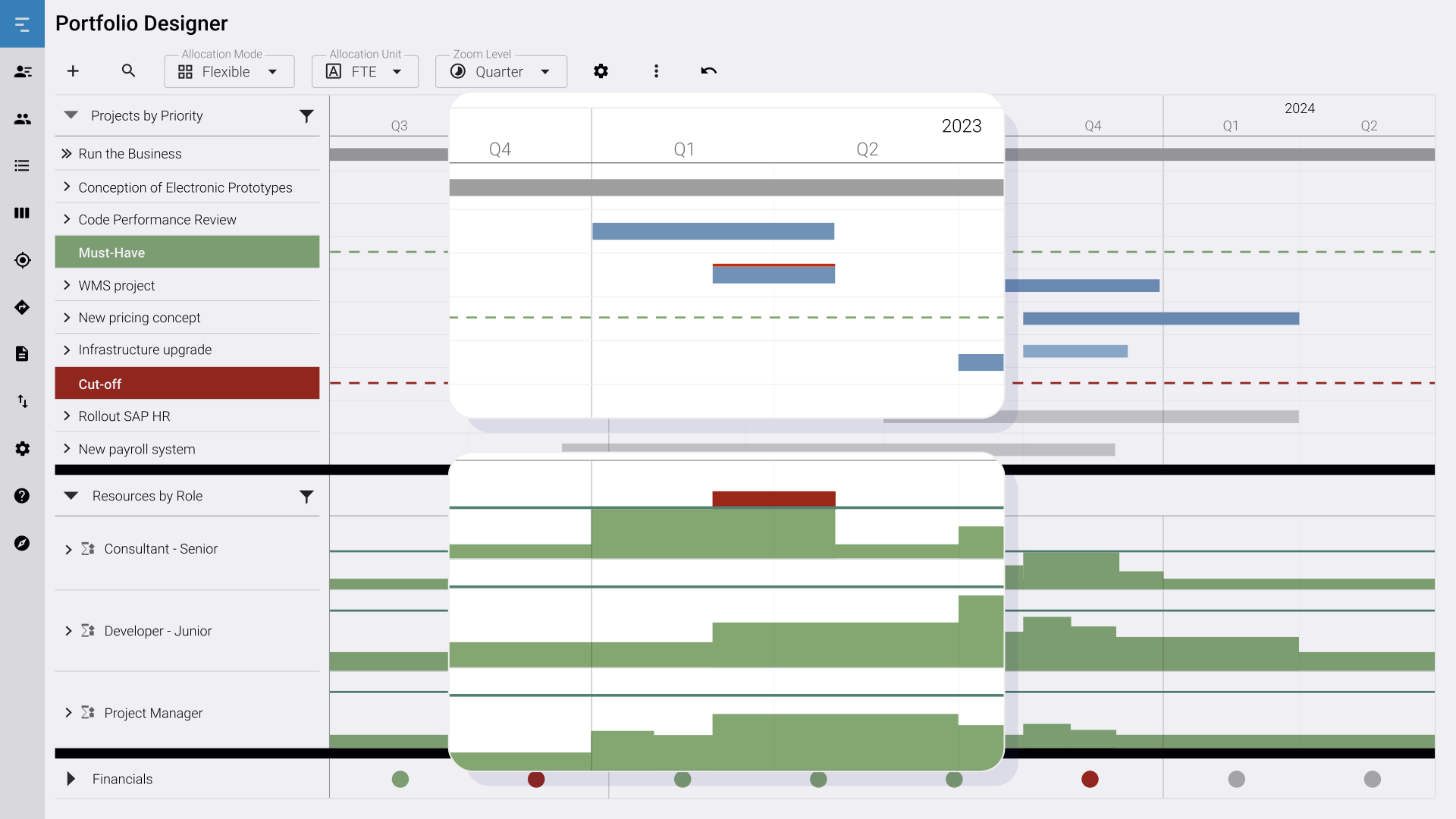
Meisterplan is a tool that supports companies with portfolio planning. It helps you evaluate projectsProjectA project is a time-limited undertaking with defined objectives and resources that delivers unique results and often includes complex tasks., set priorities, and optimize resource utilization. With Meisterplan, companies can see which projects should be implemented first and how resourcesResourceResources are all the people, places and things that you need to complete projects. The most important resource? Employees, of course!, like time and budget, are best allocated. This ensures that projects are implemented quickly and efficiently, and that company goals are achieved.
This might also be of interest to you

5 Things a PMO Manager Should Never Say
There are things a PMO Manager should avoid saying or doing to increase support, respect, and cooperation with project teams. Here is my list of five things a PMO manager shouldn't say or do, and possible alternatives to ensure the success of your PMO.

Portfolios and Scenarios in Meisterplan – What’s the Difference?
Many new Meisterplanners have questions about the difference between portfolios and scenarios and how to use them effectively. In this article, Kevin Johnson, from our partner Sandhill Consulting explains the difference and offers some best practices.

What Is a Project Management Office (PMO) and Why Do I Need It?
Learn what a Project Management Office (PMO) does, what benefits it can bring and how you can best introduce a PMO in your organization.