

From Reporting to Decision-Making
You’ve probably done this before.
You build a report to finally get a clear picture of your portfolio. You pull data from Jira, and from tools your other teams use. Fill in the gaps using spreadsheets. And for a moment, it works.
Until it’s time to make the next decision, and you have to start the process all over again. You have to figure out where things stand, which teams are overloaded, where work is slipping, and where cross-team dependencies are slowing things down.
And then there is always the same question:
“Can we take this new initiative or project on?”
More Data Isn't the Answer
At this point, most organizations focus on improving visibility. “If we just had better data…” “If we could just get everything into Jira…” “If we had the right dashboard…”
And to be fair, that instinct isn’t wrong. You do need a clear picture across your portfolio. But the real challenge isn’t just understanding the current state. It’s deciding what to do with it.
Because the question you’re being asked isn’t just:
What’s going on?
It’s:
Are we working on the right things? And given everything already in motion, what should we prioritize next?
That’s where visibility alone falls short. It shows you what’s happening, but it doesn’t help you evaluate whether your current plan makes sense, or what needs to change.

Why Reporting Isn’t Enough
Reporting helps you understand your current portfolio. It answers questions like: what has been completed, what are teams working on, and where is work off track? Many organizations invest time in improving reporting. They standardize Jira, clean up data, connect the tools your non-agile teams use, and build better dashboards. And again, none of that is wrong.
But portfolio decisions require more than just looking backward. They require you to look forward as well. And this is where many organizations get stuck. You have to evaluate priorities across current work and new requests, see how each decision affects the entire portfolio, and decide which trade-offs are acceptable.
To move forward, you have to answer these questions:
- What current work should we prioritize, delay, or stop completely?
- What is the impact on all other work if we say yes to something new?
- Do we have the capacity to take this on?
- If not, what needs to move?
- What needs to be deprioritized?
Without a clear way to answer those questions, decisions become reactive. They are driven by urgency, by whoever is asking the loudest, or by the assumption that teams will somehow make it work.
And that’s when overload becomes inevitable.
The Real Shift
Reporting is useful, but it only creates value when leaders use that information to make decisions. A portfolio should not just show what is happening. It should help leaders decide what needs to happen next.
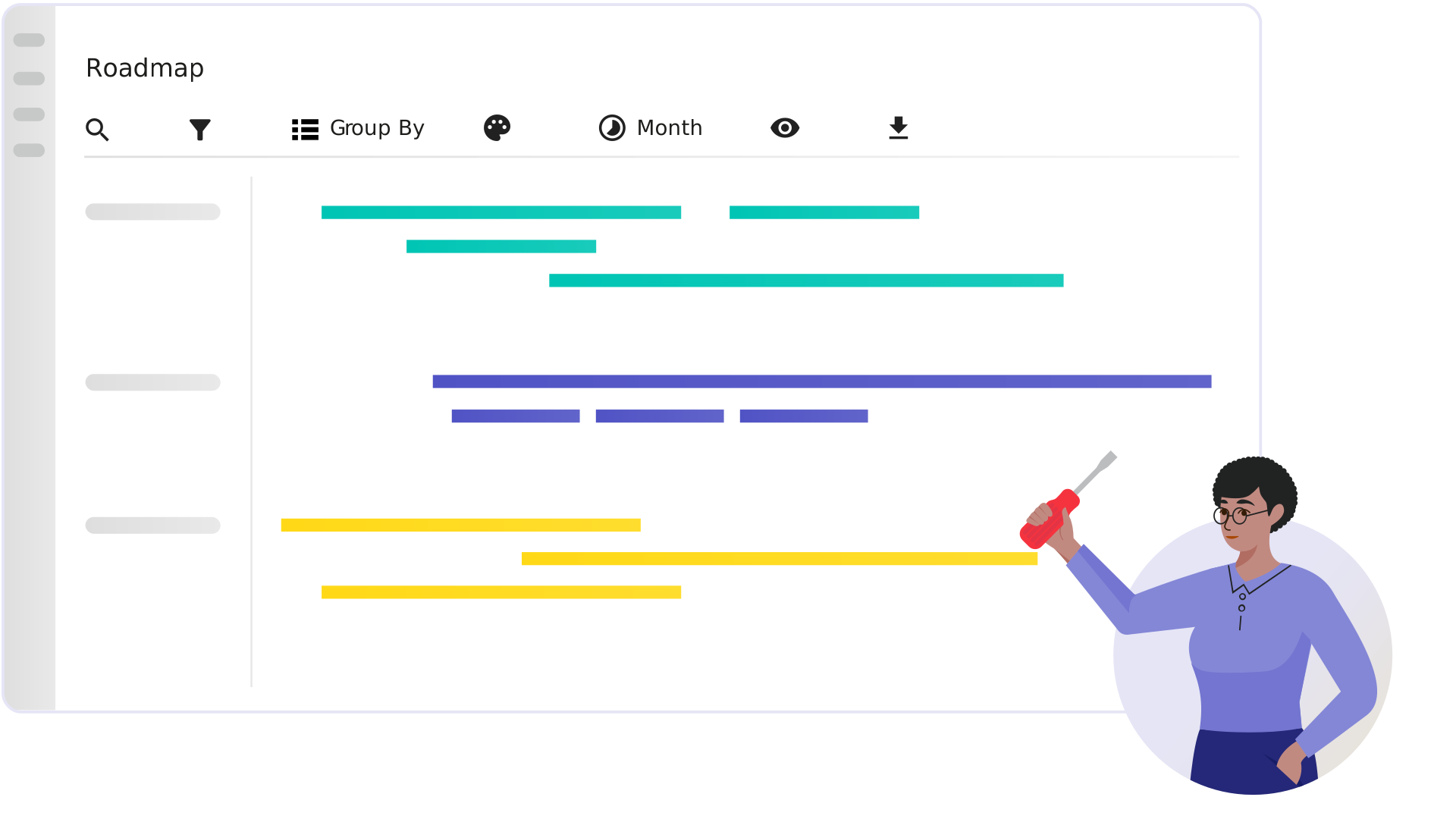
Instead of treating your portfolio as something to track, you have to treat it as something you actively shape. That means stepping back and looking at the bigger picture: what fits now, what no longer does, and how your priorities change when capacity and commitments are viewed together.
You move from tracking work to shaping it, from understanding status to making decisions about what should happen next.
What This Looks Like in Practice
In practice, this means changing how you approach portfolio-level decisions. Instead of starting with the data and trying to interpret what it means, you start with the decision you need to make and work from there.
You’re asking, “Given everything we already have in motion, what can we realistically take on, and what is actually worth taking on?”
That requires a different kind of visibility. Not just what teams are working on in Jira or other tools, but how that work adds up across the portfolio:
- What have we already committed to?
- Where is our capacity actually going?
- How much flexibility do we really have?
When that becomes clear, the conversation changes. You’re no longer trying to piece together a status view. You’re using a complete picture of the portfolio to evaluate options before you commit. You understand whether there is room for new work, where teams are already at capacity, and which work is aligned with your priorities. You can also see what changes if you shift timing, move capacity, or decide something should wait.
Your decisions become grounded in reality. Not in assumptions about what teams might be able to handle. Not in the hope that things will somehow work out. But in a clear understanding of what is actually possible.
That doesn’t mean every decision is easy. But it does mean you can make them with confidence and see the trade-offs you’re making.
Why This Matters
This isn’t a one-time problem. Every new request, shifting priority, or leadership ask creates another decision point. And if your portfolio process is built mainly around reporting, those decisions will keep feeling harder than they need to be.
Reporting is still useful. And your teams may be doing exactly what they should be doing. The problem is that reporting alone doesn’t give you the structure to evaluate priorities, capacity, and trade-offs across the whole portfolio.
That’s how organizations end up reactive. They keep improving the reports, but the decisions still depend on interpretation, assumptions, and pressure.
A better portfolio process gives you a clearer way to decide what should happen next.
Want to Go Deeper?
This is just one of five patterns that make portfolio decisions harder than they need to be.
In our full white paper, Avoiding the Downward Spiral of Portfolio Management with Jira Data, we break down:
- What’s not working in most portfolio processes
- Why it keeps happening
- And what to do differently
Read Next


Agile or Top Down Project Management? The Answer: Hybrid Project Management
What is behind the hype about agile work? And what really works? In this blog post, we answer these and other questions and explain the challenges that management faces and how you can solve them.

Are People Resources? – Why Do We Call Employees Resources?
What exactly does it mean to call people resources? We break down why the term is used and when it's appropriate to call people resources.