
Lean PPM: Definition, Examples and Synonyms
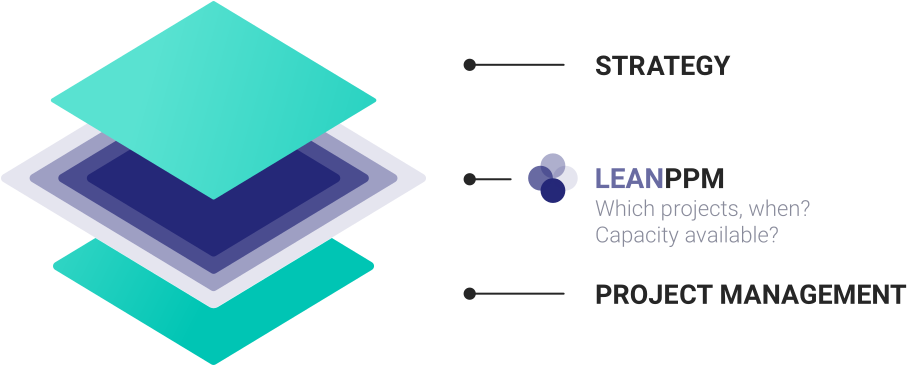
Lean Project Portfolio ManagementProject Portfolio ManagementProject portfolio management (PPM) is a process that seeks to select, prioritize, monitor and analyze a company’s projects. (Lean PPM) is a lean, pragmatic approach that helps organizations align their project portfolio with strategy, plan realistically, and continuously steer execution.
The goal is to maximize business value without rigid processes or unnecessary bureaucracy.
At the core of Lean PPM is a simple reality: in almost every organization, there are more project ideas than available resources. Lean PPM creates transparency around which initiativesInitiativesSynonym for → ProjectA project is a time-limited undertaking with defined objectives and resources that delivers unique results and often includes complex tasks. are truly strategic—and which ones can realistically be delivered with the available capacity.
Key Elements of Lean PPM:
- Strategic alignment
Every project is evaluated based on its contribution to strategic objectives. This results in clear evaluation criteria such as value, risk, effort, and dependencies. - Transparent prioritization
All project ideas are collected, evaluated, and compared to create an objective priority order. - Capacity and feasibility checks
Before projects are approved, organizations verify whether the required people, skills, and budgets are actually available, making bottlenecks visible early. - Portfolio board as decision-making body
A dedicated decision-making group determines which initiatives are approved, postponed, or stopped based on priorities and capacity. - Scenario planning
Different portfolio options are simulated to identify the combination that delivers the highest strategic value while maintaining realistic resource utilization. - Continuous cycle
Lean PPM is not a one-time exercise, but a continuous loop of collecting ideas, evaluating, deciding, executing, and reviewing.
As a result, Lean PPM ensures that organizations always know which projects truly matter, that these projects are feasible, and that the portfolio can be adjusted flexibly when conditions change.
Practical Example
Imagine you manage the projectProjectA project is a time-limited undertaking with defined objectives and resources that delivers unique results and often includes complex tasks. portfolio of a mid-sized company. Every year, around 30 project ideas emerge. However, your IT department has 15 employees, and product development relies on 40 engineers who are already heavily utilized.
The result: your teams are working on far too many projects in parallel. Strategic initiatives—such as a new customer portal (2,000 hours of effort, +10% expected revenue)—are delayed because the same experts are simultaneously working on an ERP implementation (4,500 hours of effort).
With Lean PPMPPMSynonym for → Project Portfolio ManagementProject portfolio management (PPM) is a process that seeks to select, prioritize, monitor and analyze a company’s projects., the situation changes:
- Strategy as the benchmark: Projects are evaluated based on their contribution to corporate goals.
- Capacity transparency: It becomes clear that running two major projects simultaneously overextends resourcesResourceResources are all the people, places and things that you need to complete projects. The most important resource? Employees, of course!.
- Scenario comparison: You simulate which initiative should start first.
- Clear decision: The portfolio board prioritizes the customer portal; smaller projects can still run in parallel.
The outcome: less overload, clear priorities, and a portfolio that is both strategically sound and realistically achievable.

Synonyms and Abbreviations
The term Lean Project Portfolio Management (Lean PPM) is used in various forms that are often treated as synonyms in practice:
- Lean Project Portfolio Management – the full, unabbreviated term
- Lean PPM – the widely used abbreviation in daily practice and professional articles
- Project Portfolio Management (PPM) – the general discipline; Lean PPM is a modern, lightweight variant
- Lean Portfolio Management – frequently used in agile environments (e.g., SAFe); conceptually similar to Lean PPM
FAQ
The Lean PPM framework describes four interconnected areas of project portfolio managementProject Portfolio ManagementProject portfolio management (PPM) is a process that seeks to select, prioritize, monitor and analyze a company’s projects.. Together, they define the necessary processes, meetings, and roles.
- Strategize
The portfolio is aligned with corporate strategy. Organizations define evaluation criteria to ensure that every projectProjectA project is a time-limited undertaking with defined objectives and resources that delivers unique results and often includes complex tasks. contributes to strategic objectives. - Collect
New initiatives are gathered in standardized project proposals. Proposal coaching improves quality and prepares them for decision-making. - Decide
Strategy, proposals, and execution data come together. Projects are evaluated, prioritized, approved, postponed, or stopped. This also includes resourceResourceResources are all the people, places and things that you need to complete projects. The most important resource? Employees, of course! and budget decisions. - Execute
The approved portfolio is delivered. The focus is on accelerating delivery and resolving obstacles such as resource conflicts.
Lean PPM is easier to implement and significantly less bureaucratic. It focuses on what truly matters, enables faster decisions, and incorporates capacity and risk considerations early and transparently.
Traditional PPM, by contrast, is often heavily process-driven, with long planning cycles and limited flexibility.
- Optimized use of resources and reduced waste
- Focus on initiatives with the highest strategic value
- Faster response to change (e.g., market shifts)
- Greater transparency and better decision-making
- Clear roles and responsibilities
Regular meetings are essential to successful Lean PPM. They ensure structured decision-making with clearly defined participants, inputs, and outputs.
Typical Lean PPM meetings include:
- Proposal Coaching – support for new ideas (weekly)
- Pipeline Review Committee – evaluation and prioritization (monthly)
- Portfolio Board – portfolio approval including budgets and resources (monthly/quarterly)
- Resource Conflict Resolution – resolving bottlenecks (weekly)
- Execution Steering – reviewing project status and issues (monthly)
- Strategy Workshop – deriving prioritization criteria (every 6–12 months)
You can download a full list of all meetings and participants here.
To implement Lean PPM successfully, everyone involved must clearly understand their role.
Portfolio Coordinator
- Owner of the PPM process
- Ensures process implementation and accessibility
- Facilitates decision-making meetings such as the portfolio board
- Translates strategy into evaluation criteria
- Works closely with executive leadership
Project Managers
- Responsible for successful project delivery
- Report on project status
- Escalate issues to decision bodies
- Communicate capacity needs and resource constraints
Resource Managers
- Assign people to projects and avoid over- or underutilization
- Responsible for skills development and team qualification
- Resolve short-term resource bottlenecks
You can download a full list of Lean PPM roles here.
- Unclear strategy or corporate goals make evaluation difficult
- Poor data quality or unreliable effort estimates
- Resistance if processes are perceived as additional workload
- Too much complexity or too many meetings that contradict lean principles
- Keep processes as simple as possible
- Use only the data you actually need for decisions
- Involve stakeholders early
- Use tools like Meisterplan to centralize data, enable scenariosScenarioIn project portfolio management (PPM), scenarios are potential ways that your portfolio can look, based on a set of well-defined assumptions and portfolio decisions. Scenario planning is used to forecast…, and create transparency
No. Lean PPM works equally well in agile and traditional environments. The key is its lean, iterative approach, not the delivery methodology.
Lean PPM with Meisterplan
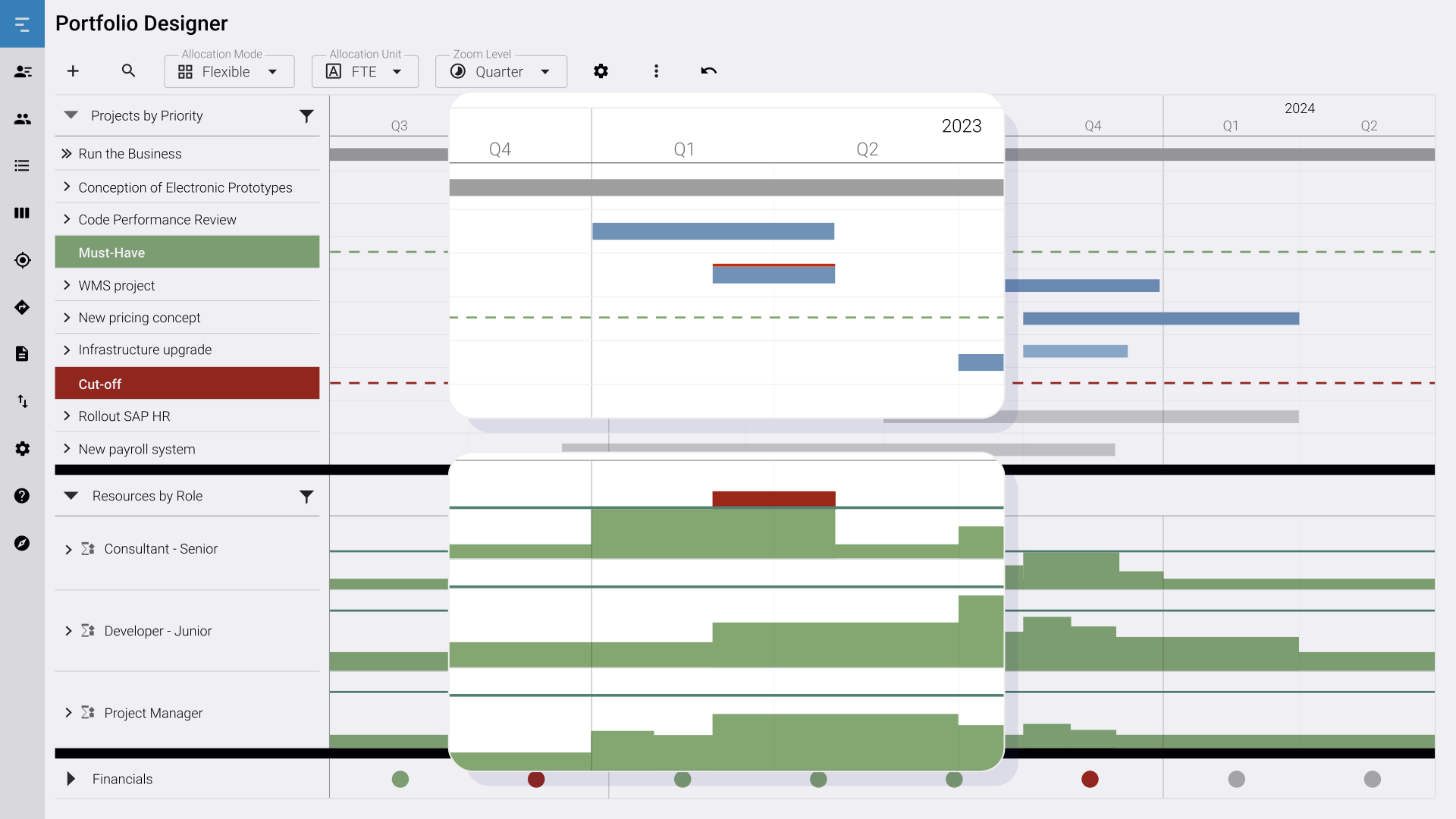
Meisterplan addresses the core requirements of PPMPPMSynonym for → Project Portfolio ManagementProject portfolio management (PPM) is a process that seeks to select, prioritize, monitor and analyze a company’s projects.. With the Portfolio Designer, you can put Lean PPM into practice. It allows you to keep track of projectsProjectA project is a time-limited undertaking with defined objectives and resources that delivers unique results and often includes complex tasks., priorities, capacity and finances in a single, interactive view. See in real time how changes to your plans affect your portfolio.
Our software helps you:
- Translate strategy into evaluation and prioritization criteria
- Collect ideas and ongoing projects with value and effort estimates in one central portfolio backlog
- Plan resourcesResourceResources are all the people, places and things that you need to complete projects. The most important resource? Employees, of course! and capacity across departments with visibility into bottlenecks
- Compare portfolio scenariosScenarioIn project portfolio management (PPM), scenarios are potential ways that your portfolio can look, based on a set of well-defined assumptions and portfolio decisions. Scenario planning is used to forecast… for well-informed decisions
- Provide transparent dashboards and reports for all stakeholders
- Support Lean PPM with the right level of functionality: comprehensive, but not complex
This might also be of interest to you

The 7 Forms of Waste in Project Portfolio Management
It's the focus on the creation of value that has finally carried the concept of lean far beyond the production floor. In this article Dr. Jörg Leute applies the seven forms of waste to project portfolio management.

Lean Project Portfolio Management for Organizations
Based on a brief description of lean production, Dr. Jörg Leute explains what “lean project portfolio management” means and what effects it can have on your organization.

Lean PPM
Through its cloud software and Lean PPM™, Meisterplan enables business leaders to drive decisions that keep their organizations moving forward. The Lean PPM™ framework consists of all the roles, tools and meetings your organization needs to develop and prioritize initiatives and quickly adapt your plans so your organization thrives even in times of constant change.